
Impact Your Divorce with Maximum Analytic Credibility
Effective and fair decision-making is at the heart of every successful divorce settlement. Whether you’re contemplating separation or already navigating the process, reaching outcomes that are both equitable and satisfying can feel overwhelming. Fortunately, leveraging strategic data and analytical methods can make all the difference. In this comprehensive guide, we’ll explore how maximizing analytic credibility can shape better divorce decisions—and why it matters for your future.
Understanding Decision-Making in Divorce
Effective decision-making relies on the strategic use of data and analysis. According to Merriam-Webster, a ‘decision’ is a determination arrived at after consideration. Important decisions—such as investments or legal judgments—should involve robust analytics known as ‘decision analytics.’
When it comes to divorce, every choice—from dividing assets to co-parenting agreements—can have lasting consequences. Bringing robust decision analytics into play is not just wise; it’s essential for achieving outcomes you can trust.
The Five Tiers of Analytic Methods for Divorce Settlement
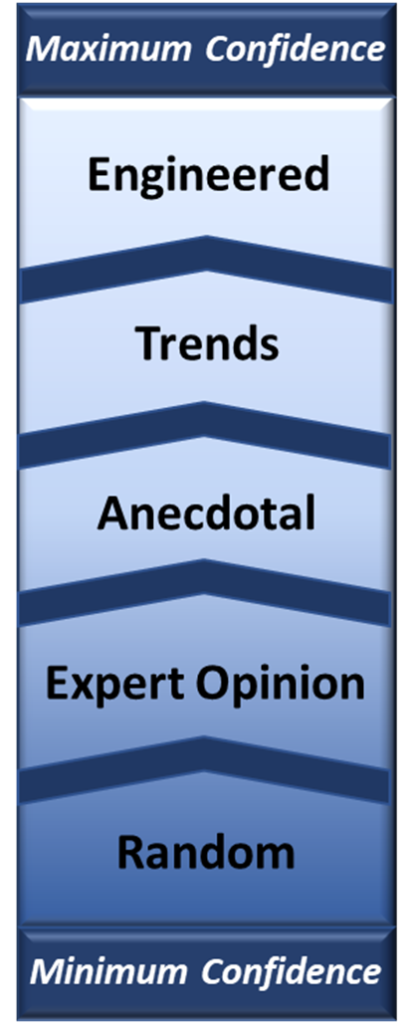
Analytic methods fall into five tiers of confidence. These tiers are ranked from lowest to highest, as described and visualized below:
- Random: Quick and baseless, suited for trivial choices; offers no confidence.
- Expert opinion: Relies on specialists’ input, useful as a sanity check when data is lacking, but credibility is limited to the experts themselves.
- Anecdotal: Draws from specific examples; commonly used with limited data but offers minimal confidence due to possible differences in outcome factors.
- Trends: Uses statistical analysis of multiple past outcomes to predict future results; powerful with rich data, though sensitive to outliers and causality issues.
- Engineered: Delivers the highest credibility by quantifying all solution details, minimizing bias and irrelevance.
Higher tiers yield greater confidence but demand more effort and data. Analysts should choose the method that best balances confidence with practicality.
Why Does Analytic Credibility Matter in Divorce?
The analytics produces a conclusion. The credibility of the analytics influences the likelihood that the conclusion will affect the divorce settlement. Other important considerations include:
Ensuring Fair Settlements
Credible analytics help ensure asset distribution, child support, and custody arrangements are based on objective facts rather than emotion or bias. Many divorcing couples find that engineered solutions—those that rigorously quantify details and minimize irrelevance—create the least room for disputes down the road.
Reducing Stress and Uncertainty
Divorce is stressful. Confident answers built on reliable data and objective methods can provide peace of mind. Instead of relying on anecdotal stories (“My friend got X in their divorce”), structured analytics highlight what’s reasonable in your unique situation.
Avoiding Costly Mistakes
Relying solely on random decisions or anecdotal evidence can lead to costly errors—financially and emotionally. Seeking expert opinion or analyzing trends improves outcomes, but engineered methods offer the best assurance of fairness.
Practical Steps: Applying Decision Analytics to Your Divorce
1. Gather Relevant Data
Start by collecting any documentation related to marital assets, income, expenses, debts, and children’s needs. The legal discovery process supports this. The richer your dataset, the more reliable your analysis will be.
2. Analyze Data
Ingest and review data to model and identify trends, anomalies, gaps, etc. Characterize and document findings.
3. Consult Professionals and Clients
Consult with clients, attorneys, or other experts who can lend expert opinion to explain or validate data findings. Ask for data-driven recommendations and inquire about precedent cases similar to yours.
4. Research Market
Research industry and consumer benchmarks to corroborate findings. Consider the credibility of the market source. Look at local court statistics on asset division, alimony, and custody outcomes. Sites such as LegalZoom and Nolo offer insights into recent settlement trends.
4. Engineer Solutions
Work collaboratively with professionals to create engineered solutions. This might include using spreadsheets, calculators, or mediation tools that quantify each aspect of your settlement—removing guesswork and personal bias.
Real-Life Example: Engineered Analytics in Divorce
Consider two spouses negotiating property division. One party proposes splitting everything fifty-fifty, while the other wants to account for contributions, retirement savings, and future earning potential. By engineering their solution—inputting all variables into a detailed model—they reach an agreement backed by transparent logic and data, reducing resentment and confusion.
Balancing Confidence with Practicality
While engineered solutions deliver maximum credibility, they also require time and resources. Sometimes, especially for minor issues, simpler methods suffice. The key is to reserve rigorous analytics for the most impactful choices and seek professional help when needed. Ideally, an analyst will offer proven processes and tools to achieve results with greatest credibility and do so quicker and cheaper.
Conclusion: Empowering Your Divorce Decisions
In divorce, uncertainty abounds—but you don’t have to let it dictate your future. By understanding and applying robust analytic methods, you can achieve settlements that are fair, defensible, and tailored to your needs.
If you’re pursuing divorce, maximize your analytic credibility. Gather data, analyze options, consult experts, and engineer solutions. It’s the surest path to making confident decisions and moving forward with clarity.